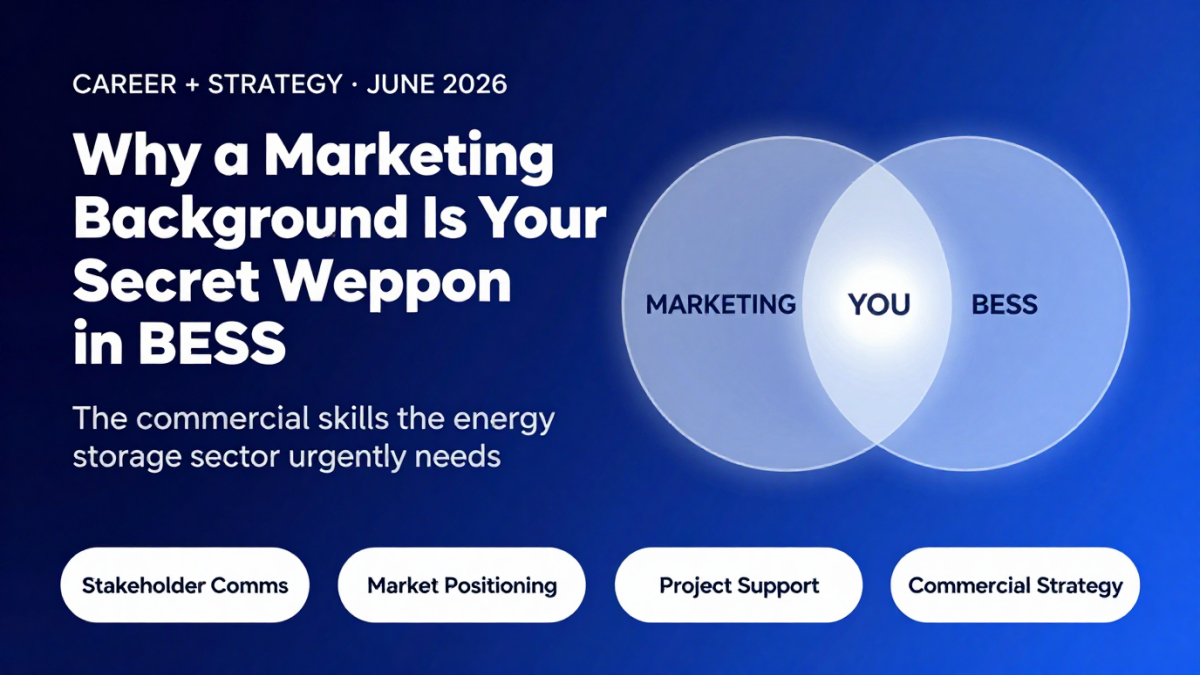
When I tell people I work at the intersection of marketing and battery energy storage, I sometimes get a puzzled look. The assumption is that energy is an engineering discipline, and that commercial or marketing backgrounds belong in consumer goods, tech, or professional services not on a BESS project site or in a developer’s pipeline meeting.
That assumption is wrong, and it is becoming more wrong with every billion dollars that flows into the battery storage market. Here is why professionals with marketing and commercial backgrounds have a unique and growing role to play in this sector.
The Industry Is at a Commercial Inflection Point
The battery energy storage market is projected to grow from USD 81.6 billion in 2026 to USD 195 billion by 2036. That kind of growth does not happen through engineering alone. It requires developers who can identify and win projects, commercial teams who can structure deals and communicate value, and marketing professionals who can build brand credibility in a market where trust and education are in short supply.
The sector is technically mature enough to deploy at scale but commercially early enough that the playbooks are still being written. Customers — utilities, municipalities, commercial real estate operators, industrials are evaluating battery storage for the first time. They need clear, credible communication about what BESS delivers: resilience, cost savings, revenue streams, and sustainability credentials. That is a marketing challenge as much as a technical one.
What Marketing Brings to BESS Projects
The skills that define effective marketing audience analysis, message development, stakeholder communication, brand positioning translate directly into project success in the energy sector. A business development professional who can identify a municipality’s pain points around energy resilience and frame a storage solution in terms of community benefit and long-term cost savings is more effective than one who leads with specifications and capacity curves.
Project development timelines in BESS average 12 to 24 months from initial consultation to energisation. Across that timeline, commercial and communication skills are active at every stage: understanding client needs, navigating procurement processes, managing regulatory stakeholders, building relationships with financiers, and ultimately communicating the operational value of the deployed system.
The commercial playbook for battery storage is still being written. Professionals who can bridge technical capability and buyer understanding will help define it.
The Supply Chain Localization Opportunity
One of the most significant trends reshaping the BESS commercial landscape in 2026 is supply chain localization. Following years of near-total dependence on Chinese cell manufacturing, the US and European markets are building domestic supply chains driven by policy incentives, domestic content requirements, and a growing recognition that end-to-end quality control matters.
This shift creates a marketing and commercial communications challenge that few pure engineers are equipped to solve: how do you reposition a technology that has been commoditised on price into one where provenance, reliability, and supply chain transparency are the value drivers? That is brand strategy and market positioning skills that marketing professionals bring directly.
Building Credibility at the Intersection
The most valuable thing a marketing or commercial professional can do when entering the BESS sector is commit to learning the technical fundamentals not to become an engineer, but to communicate with engineers and clients credibly. Understanding why LFP dominates the current market, what megawatt-hours mean in project economics, how interconnection timelines affect developer returns this is the vocabulary of the sector.
Combined with skills in stakeholder communication, market positioning, and commercial strategy, this technical literacy creates a professional profile that the BESS sector genuinely needs and currently has too few of.
My Take
I made the transition into the energy sector because I saw an industry going through the kind of commercial growth that requires more than technical talent to navigate. The battery storage boom is creating demand for professionals who can connect technology to markets, projects to communities, and capability to commercial outcomes. That intersection is where I work and it is where I believe some of the most interesting career opportunities in clean energy will emerge over the next decade.
Ayushi Nema writes about battery storage, clean energy markets, and the intersection of marketing and the energy transition.
Follow her at ayushinemaofficial.com


Leave a Reply