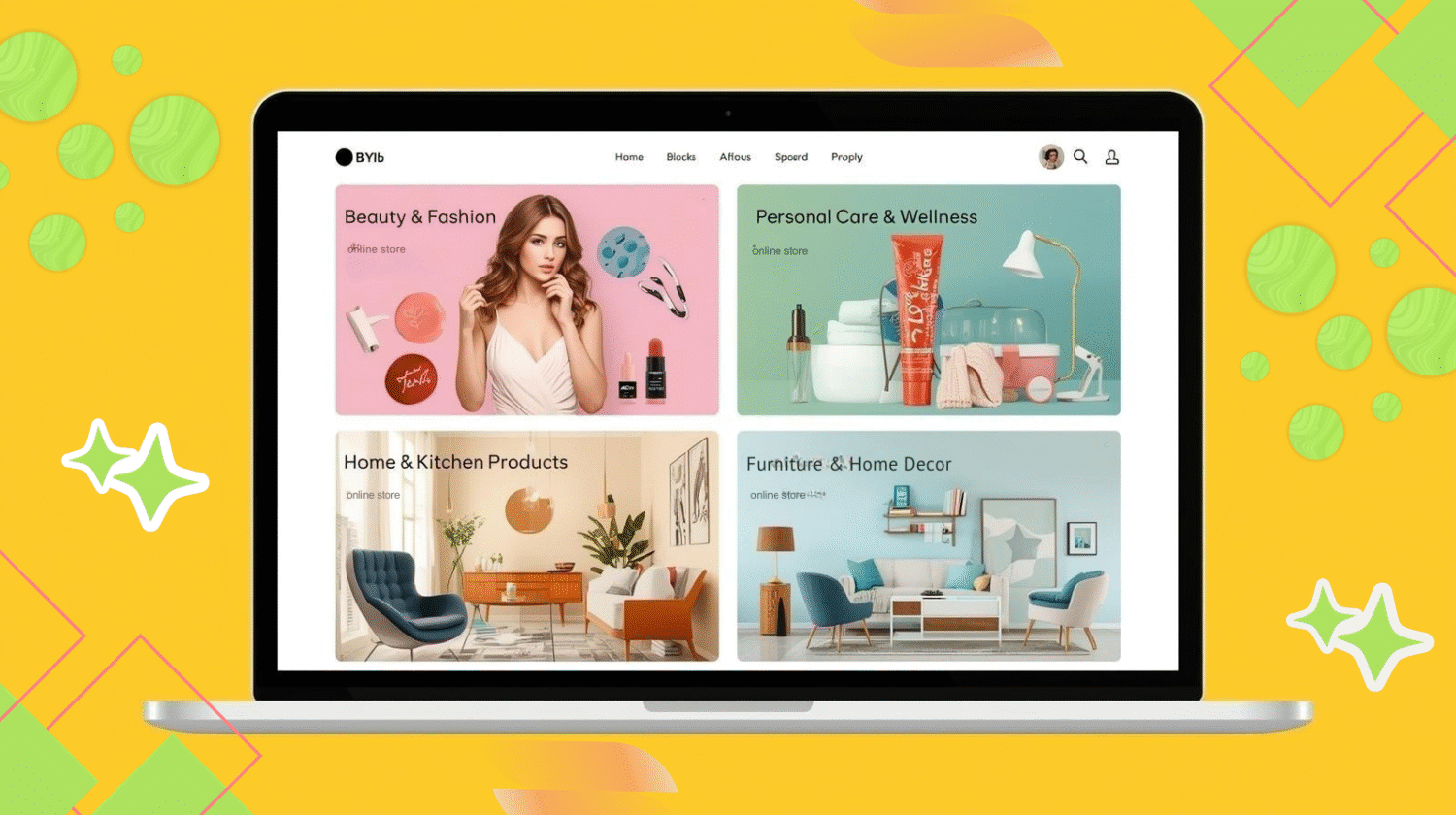
If you are a small entrepreneur in the USA selling Beauty & Fashion, Personal Care & Wellness, Home & Kitchen, or Furniture & Home Décor, choosing the right online marketplace in 2026 can make or break your sales. Different platforms attract different buyers, have different fee structures, and favor different types of products and price points.
In this blog, we’ll break down the best marketplaces in 2026 for each of these categories and what type of seller they fit.
Before You Choose: Think Category + Customer
Before listing anywhere, get clear on three things:
- What price range are you in (budget, mid, premium, luxury)?
- Who is your primary buyer (bargain hunter, trend-driven, conscious consumer, design lover, etc.)?
- Are you selling unique/handmade items or mass-market products?
Why this matters: Walmart’s marketplace is great for value-driven shoppers, while platforms like Etsy or TikTok Shop reward uniqueness and trendiness. Amazon brings massive traffic but with high competition and pay-to-play ads.
Best Marketplaces for Beauty & Fashion (USA, 2026)
Beauty and fashion are crowded but high-opportunity categories in 2026, especially if you leverage marketplaces plus social commerce.
Top marketplace options
- Amazon Fashion & Beauty
- Walmart Marketplace (Fashion & Beauty)
- Best for: Value-priced apparel, accessories, and everyday beauty products.
- Pros: 120M+ unique monthly visitors, lower seller saturation than Amazon, strong focus on value-driven fashion.
- Cons: Tight onboarding, strong focus on competitive pricing, less premium brand perception for some shoppers.
- TikTok Shop (Fashion & Beauty)
- Best for: Trend-driven, visually strong products, impulse buys, Gen Z + young Millennials.
- Pros: Social commerce is exploding; TikTok Shop is one of the fastest-growing sales channels and is driven by discovery, live shopping, and creator content.
- Cons: Requires consistent content, live streams, and creator partnerships to work.
- Etsy (Fashion, Beauty Adjacent)
- Best for: Handmade, custom, vintage fashion, and artisan beauty (e.g., natural soaps, indie skincare with a crafted story).
- Pros: Buyers actively look for unique and handmade items; Etsy dominates handmade and vintage goods.
- Cons: Fees can add up, competition in popular niches, must stand out via branding and photography.
- Poshmark / eBay (Fashion)
Quick fit table: Beauty & Fashion
Best Marketplaces for Personal Care & Wellness
Personal care & wellness buyers care about trust, ingredients, and social proof. In 2026, this category is booming online but faces growth blockers like fragmentation, compliance, and acquisition costs.
Top marketplace options
- Amazon (Beauty, Health & Personal Care)
- Best for: Everyday personal care items, wellness accessories, devices (e.g., massagers, fitness accessories).
- Pros: Strong search volume; shoppers already search Amazon first for self-care essentials.
- Cons: Strict regulations and documentation for some health-related products; high competition.
- Target+ and Walmart Marketplace
- Best for: Mid-market personal care and wellness brands that can pass curated onboarding.
- Pros: Strong trust; Walmart and Target attract both value and increasingly higher-income shoppers.
- Cons: More selective; not every small seller will get in early.
- Etsy (Wellness / Self-care)
- TikTok Shop (Wellness gadgets & routines)
- Best for: Wellness accessories and routines that demo well on video (gua sha tools, massage devices, fitness add-ons).
- Pros: Perfect for “before-after,” routine, and transformation content; social proof via creators.
- Cons: Performance depends on content quality and partner creators, not just listing.
Quick fit table: Personal Care & Wellness
Best Marketplaces for Home & Kitchen Products
Home & Kitchen remains one of the strongest e‑commerce categories in the USA, with kitchenware alone projected to reach around 25+ billion USD by 2027 as home cooking and entertaining stay popular.
Top marketplace options
- Amazon (Home & Kitchen)
- Best for: Widely appealing kitchen gadgets, cookware, organizers, and small appliances.
- Pros: Massive search demand; kitchen appliances and home tools are consistently high-demand online products.
- Cons: Product saturation; you must differentiate with functionality, design, or branding.
- Walmart Marketplace
- Wayfair (Home Goods & Kitchen)
- Etsy (Home & Kitchen Décor / Handmade)
- TikTok Shop (Viral Kitchen Gadgets)
- Best for: Innovative, demonstrable gadgets and tools that can go viral in short videos.
- Pros: Perfect for “watch this hack” style content; impulse buying is strong here.
- Cons: Requires storytelling and continuous content, not a “set and forget” listing.
Quick fit table: Home & Kitchen
Best Marketplaces for Furniture & Home Décor
Furniture and home décor buyers in 2026 are driven by aesthetics, convenience, and trust in delivery/returns. Large items require reliable logistics; decor needs strong visual merchandising.
Top marketplace options
- Wayfair
- Amazon (Furniture & Home Décor)
- Walmart Marketplace & Target+
- Best for: Affordable furniture and décor with a “everyday home” aesthetic.
- Pros: Strong offline–online integration, exposure to shoppers who mix in‑store and online shopping.
- Cons: More curation and onboarding requirements compared to open marketplaces.
- Etsy (Home Décor)
- TikTok Shop (Decor & Small Furniture)
- Best for: Trendy décor (LED lamps, wall art, organizers) that look great on video.
- Pros: Impulse, visually-driven buying; perfect for “room transformation” content.
- Cons: Strong dependence on content and creator partnerships.
Quick fit table: Furniture & Home Décor
2026 Strategy: Don’t Rely on Just One Marketplace
In 2026, the safest and most profitable approach is multi-channel: mix at least one big marketplace with one social or specialty channel.
- Pair Amazon or Walmart with your own Shopify store to capture both marketplace demand and brand-loyal buyers.
- Layer TikTok Shop or other social commerce for discovery and virality, then retarget to your main marketplace or website.
- Use Etsy or niche platforms if your offer is handmade, artistic, or highly differentiated.
Still Confused About Where to Start?
If you feel overwhelmed by marketplace options, fee structures, or how to position your product across Amazon, Walmart, Etsy, TikTok Shop, and beyond, you don’t have to figure it out alone.
If you are confused with your e‑commerce initiatives, just connect with me—I can help you get clarity on the right marketplaces, pricing, and launch strategy in just a few hours of focused research and consulting tailored to your category and stage.
Leave a Reply